
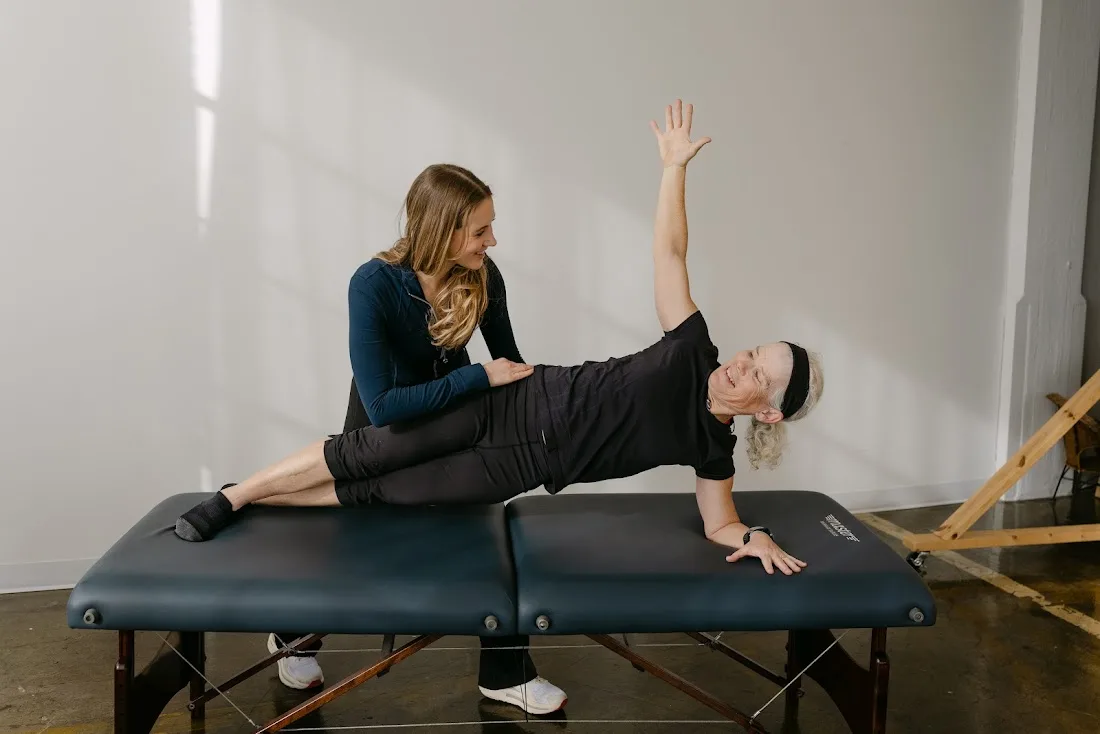
KinetiQuest Physical Therapy, Waukesha, WI. Exercise video library.
Short, clinic-filmed exercise demos from KinetiQuest Physical Therapy in Waukesha, WI. Find the drill your physical therapist assigned, watch the setup, and train it with better form at home or in the gym.
What is in this library?
Nearly 100 short exercise videos covering the shoulder, hip, neck, low back, core and lifting technique. These are the same drills Dr. Collin Christensen and Dr. Amy Jensen use with patients at KinetiQuest Physical Therapy. Most clips run under a minute and show one drill from start to finish.
The library is built for active adults, lifters, runners and athletes who want to keep progressing between one-on-one sessions.
How to use these videos
Start with your plan
Pick the drills your physical therapist assigned. These videos support your plan of care. They do not replace an evaluation.
Watch the setup first
Position, tempo and range matter more than load. Watch the full clip once before you try it, then match what you see.
Listen to your body
Mild discomfort that settles quickly can be normal during rehab. Sharp pain, numbness or pain that lingers into the next day means it is time to check in with us.
Hip flexor active release
Two longer demos on a drill we use often with lifters, runners and desk workers who feel tight through the front of the hip.
PNF Kneeling Hip Flexor Active Release
PNF Hip Flexor Active Release
Looking for a specific drill?
Type the exercise name your physical therapist gave you, or a body area like shoulder, hip or knee. The videos below filter as you type.
Showing all 114 drills
Neck & Upper Back
Chin tuck, shrug and thoracic drills for neck pain, headaches and a stiff upper back.
Shoulder, Elbow & Wrist
Mobility, rotator cuff and shoulder blade control drills for lifters, overhead athletes and anyone with a cranky shoulder.
Bench Press & Pressing
Tempo, isometric and position drills that help you press heavy with less shoulder and chest pain.
Low Back, Trunk & QL
Controlled spine mobility and strength work, including Jefferson curl and Roman chair progressions, for low back pain and stiffness.
Deadlift & Hinge
Position and isometric pulls to rebuild a confident, pain-free hinge.
Hip & Groin
Hip rotation, figure four, 90-90, clamshell and adductor drills for hip and groin pain.
Core Control
Reactive neuromuscular training (RNF) and core drills that build trunk control you can use under load.
Knee, Foot & Running
Drills for knee pain, calf and foot strength, and a stronger push-off when you run.
No drills match that search. Try a body area like shoulder or hip.
Common questions.
Not sure which drills fit your goals? A free Recovery Strategy Call is the fastest way to find out.
Can I do these exercises without seeing a physical therapist?
Many of these drills are safe for healthy, active adults. The right exercise, dose and progression depend on your evaluation, so if you have pain, a recent injury or a recent surgery, book a visit first. In Wisconsin you can see a physical therapist directly with no referral needed.
How often should I do these drills?
It depends on the drill and your goal. Mobility drills are often done daily, while strength and isometric drills are usually done two to four times per week. Your physical therapist will set your exact sets, reps and tempo.
What does RNF mean in the video titles?
RNF stands for reactive neuromuscular training. A band or cable gently pulls you out of position so your body has to work to hold good form. It is a fast way to clean up a movement pattern.
Is it normal to feel some discomfort during these exercises?
Mild discomfort that settles within 24 hours is common when you load a sensitive area. Sharp pain, numbness, tingling or pain that builds during the session is a sign to stop and contact us.
Where can I find new videos?
Every video lives on the KinetiQuest YouTube channel, and we add new drills as we film them. Subscribe at youtube.com/@KinetiQuest to see them first.
Medical disclaimer: These videos are for educational purposes only and are not a substitute for an individual evaluation or medical advice. Stop any exercise that causes sharp or worsening pain and consult a licensed provider.
Resources
Exercise Video Library
Short, clinic-filmed exercise demos from KinetiQuest Physical Therapy in Waukesha, WI. Find the drill your physical therapist assigned, watch the setup, and train it with better form at home or in the gym.
Filmed by the KinetiQuest Physical Therapy team | 97 drills | Updated October 2026
Quick answer
What is in this library?
Nearly 100 short exercise videos covering the shoulder, hip, neck, low back, core and lifting technique. These are the same drills Dr. Collin Christensen and Dr. Amy Jensen use with patients at KinetiQuest Physical Therapy. Most clips run under a minute and show one drill from start to finish.
The library is built for active adults, lifters, runners and athletes who want to keep progressing between one-on-one sessions.
Before you start
How to use these videos
1. Start with your plan
Pick the drills your physical therapist assigned. These videos support your plan of care. They do not replace an evaluation.
2. Watch the setup first
Position, tempo and range matter more than load. Watch the full clip once before you try it, then match what you see.
3. Listen to your body
Mild discomfort that settles quickly can be normal during rehab. Sharp pain, numbness or pain that lingers into the next day means it is time to check in with us.
Featured walkthroughs
Hip flexor active release
Two longer demos on a drill we use often with lifters, runners and desk workers who feel tight through the front of the hip.
PNF Kneeling Hip Flexor Active Release
PNF Hip Flexor Active Release
11 videos
Neck & Upper Back
Chin tuck, shrug and thoracic drills for neck pain, headaches and a stiff upper back.
23 videos
Shoulder, Elbow & Wrist
Mobility, rotator cuff and shoulder blade control drills for lifters, overhead athletes and anyone with a cranky shoulder.
12 videos
Bench Press & Pressing
Tempo, isometric and position drills that help you press heavy with less shoulder and chest pain.
14 videos
Low Back, Trunk & QL
Controlled spine mobility and strength work, including Jefferson curl and Roman chair progressions, for low back pain and stiffness.
6 videos
Deadlift & Hinge
Position and isometric pulls to rebuild a confident, pain-free hinge.
23 videos
Hip & Groin
Hip rotation, figure four, 90-90, clamshell and adductor drills for hip and groin pain.
5 videos
Core Control
Reactive neuromuscular training (RNF) and core drills that build trunk control you can use under load.
3 videos
Knee, Foot & Running
Drills for knee pain, calf and foot strength, and a stronger push-off when you run.
FAQ
Common questions
Can I do these exercises without seeing a physical therapist?
Many of these drills are safe for healthy, active adults. The right exercise, dose and progression depend on your evaluation, so if you have pain, a recent injury or a recent surgery, book a visit first. In Wisconsin you can see a physical therapist directly with no referral needed.
How often should I do these drills?
It depends on the drill and your goal. Mobility drills are often done daily, while strength and isometric drills are usually done two to four times per week. Your physical therapist will set your exact sets, reps and tempo.
What does RNF mean in the video titles?
RNF stands for reactive neuromuscular training. A band or cable gently pulls you out of position so your body has to work to hold good form. It is a fast way to clean up a movement pattern.
Is it normal to feel some discomfort during these exercises?
Mild discomfort that settles within 24 hours is common when you load a sensitive area. Sharp pain, numbness, tingling or pain that builds during the session is a sign to stop and contact us.
Where can I find new videos?
Every video lives on the KinetiQuest YouTube channel, and we add new drills as we film them. Subscribe at youtube.com/@KinetiQuest to see them first.
Medical disclaimer: These videos are for educational purposes only and are not a substitute for an individual evaluation or medical advice. Stop any exercise that causes sharp or worsening pain and consult a licensed provider.