
Everything You Need to Know About Dry Needling
What is Dry Needling Therapy?
Dry needling therapy is a technique used by physical therapists to treat muscle pain and tightness. It involves inserting thin, sterile needles into specific trigger points—tight knots in your muscles or tissues that cause pain. These needles don’t inject any substance (hence the term “dry”), but are used to stimulate muscle tissue directly.
Although dry needling is often confused with acupuncture, it’s rooted in modern musculoskeletal medicine rather than Traditional Chinese Medicine (TCM) frameworks. It’s designed to relieve tension, improve mobility, and promote healing in the affected muscles.
How Does Dry Needling Work For Pain Relief?
The primary goal of dry needling is to relieve pain, release muscle tension, reduce inflammation, and promote blood flow to the area. The actual physiology of the intervention can be a bit complex, but here’s a simple breakdown of how it works:
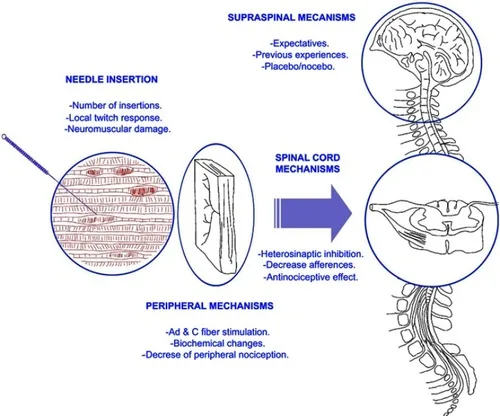
- Trigger Point Stimulation: Trigger points are sensitized myofascial tissue which often feel like painful knots in your muscles that form due to overuse, injury, or poor posture. These areas become hypoxic, and chemically irritable (much like lactic acid build-up in working muscles). Peripheral nerves can pick up on this irritation, referring pain into other areas of the body. By inserting a needle into the trigger point, the therapist stimulates a twitch reflex, and disrupts the hypoxic chemical environment. To the patient, it often feels like “releasing a knot,” thus easing tightness and discomfort.
- Prolotherapy & Improved Blood Flow: Dry needling signals for increased blood flow to the affected area by causing micro-punctures of the tissue. This ultimately helps reduce inflammation and promotes the healing of injured tissue by initiating a cascade of healing factors. Enhanced circulation aids in faster recovery, and can be helpful “reset” to overcome chronic injuries, especially when combined with rehabilitation exercises.
- Pain Relief: After dry needling, the body releases natural pain-relieving chemicals called endorphins. These endorphins provide immediate pain relief and help reduce long-term discomfort from musculoskeletal issues, oftentimes with longer-lasting relief than oral medications.
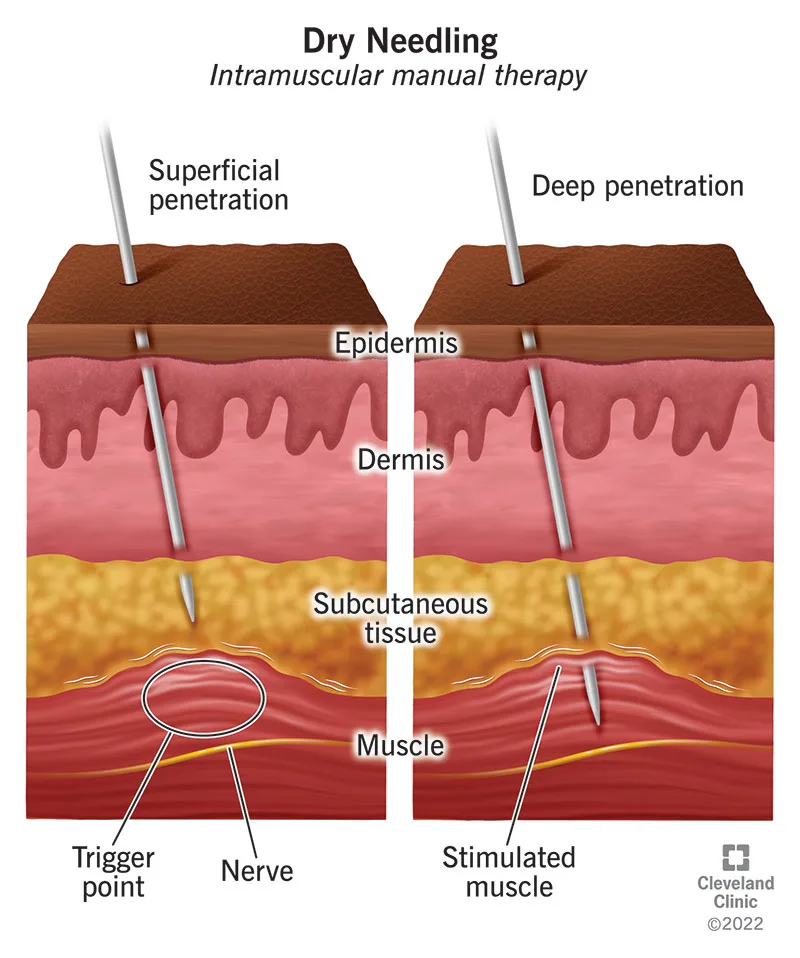
Dry needling is deep, aimed at myofascial tissues.
Dry Needling + Exercise: The Ideal Combination for Strength & Mobility.
While dry needling can be highly effective for treating chronic muscle pain and tension, it works best in conjunction with appropriate mobility exercises and strength training. Tight muscles or joints can limit your range of motion and cause compensations elsewhere in your body.
- Mobility Exercises: After dry needling, targeted mobility exercises can help restore the range of motion in the affected area. These exercises are designed to improve flexibility and allow the muscles to function optimally.
- Strength Training: Weak muscles can contribute to muscle pain and trigger point development. Incorporating strengthening exercises into your rehabilitation plan will address these imbalances and prevent future injuries. This combination of dry needling, mobility exercises, and strength training helps ensure long-term recovery.
If you’re experiencing pain or discomfort due to muscle tension, incorporating dry needling with the right rehabilitation program can make a huge difference in your recovery.
What Conditions Can Dry Needling Help Treat?
Dry needling therapy can help treat a wide range of musculoskeletal issues, including:
- Chronic Muscle Tension: If you suffer from persistent muscle stiffness or pain, dry needling can relieve tight muscles and improve mobility.
- Neck Pain: Dry needling is effective for alleviating neck pain caused by muscle tension or poor posture.
- Back Pain Relief: If you struggle with lower back pain, dry needling can help target tight muscles and reduce discomfort.
- Headaches: Many headaches, especially tension headaches, are linked to tight muscles in the neck and shoulders. Dry needling helps release these muscles, reducing headache frequency and severity.
- Sports Injuries: Whether you’ve pulled a muscle or strained a ligament, dry needling can aid in your recovery by releasing tight muscles and promoting healing.
- Shoulder Pain Treatment: If you have shoulder pain due to muscle tension or injury, dry needling can help release tight muscles and improve function.
- TMJ Disorders: Tightness in the jaw can lead to TMJ pain, which dry needling can address by relaxing the surrounding muscles.
What Does Dry Needling Feel Like?
Most patients find dry needling to be a unique sensation, but an otherwise comfortable procedure. You might feel a slight pinching sensation as the needle enters the skin. A deeper ache or pulsing sensation is common once the needle reaches the trigger point. This is often described as a “twitch response” or mild cramp, caused by mechanical stimulation of a reflex (like getting your knee tapped on by a reflex hammer). If you experience pain referral from your trigger point, the needle sensation can reproduce this sensation as well, a good sign that the correct area is being treated. After the needle is removed you may experience mild soreness for a day or two, but this typically resolves quickly. Many patients report feeling significant relief from muscle tension and pain after the treatment.
Is Dry Needling Safe?
Dry needling is a very safe treatment technique, with serious side effects occurring in less than .01% of treatments when performed by an adequately trained provider (compare that with up to 3% with taking something as benign as over the counter ibuprofen!). These side effects include slight bleeding, local bruising and local tenderness. Be sure to ask your provider about their qualifications – more serious side effects are possible if your provider does not follow proper treatment protocol, not all dry needling treatments are created equally!
How Many Sessions of Dry Needling Are Needed?
The number of sessions required depends on the severity of your condition and your body’s response to treatment. Some patients experience relief after just one session, while others may need multiple treatments. Typically, dry needling sessions are spaced a few days apart to allow your muscles time to recover. Your physical therapist will create a customized treatment plan to address your unique needs.
Is Dry Needling Right for You?
Dry needling is a highly effective technique for treating muscle pain, tension, and a variety of musculoskeletal issues. However, it’s not suitable for everyone. If you’re dealing with chronic pain, sports injuries, or mobility issues, it’s a good idea to consult with a licensed physical therapist who can evaluate your condition and determine whether dry needling should be part of your recovery plan.
Conclusion
Dry needling therapy is a safe, evidence-based treatment option that can provide relief from muscle pain, stiffness, and other musculoskeletal conditions. When combined with appropriate rehabilitation exercises, such as mobility work and strength training, dry needling offers a comprehensive approach to recovery and long-term pain relief.
If you’re ready to start your journey toward pain-free living, contact our clinic today to schedule a consultation with one of our experienced physical therapists. We’ll help you develop a customized treatment plan tailored to your needs and guide you through every step of the recovery process.